

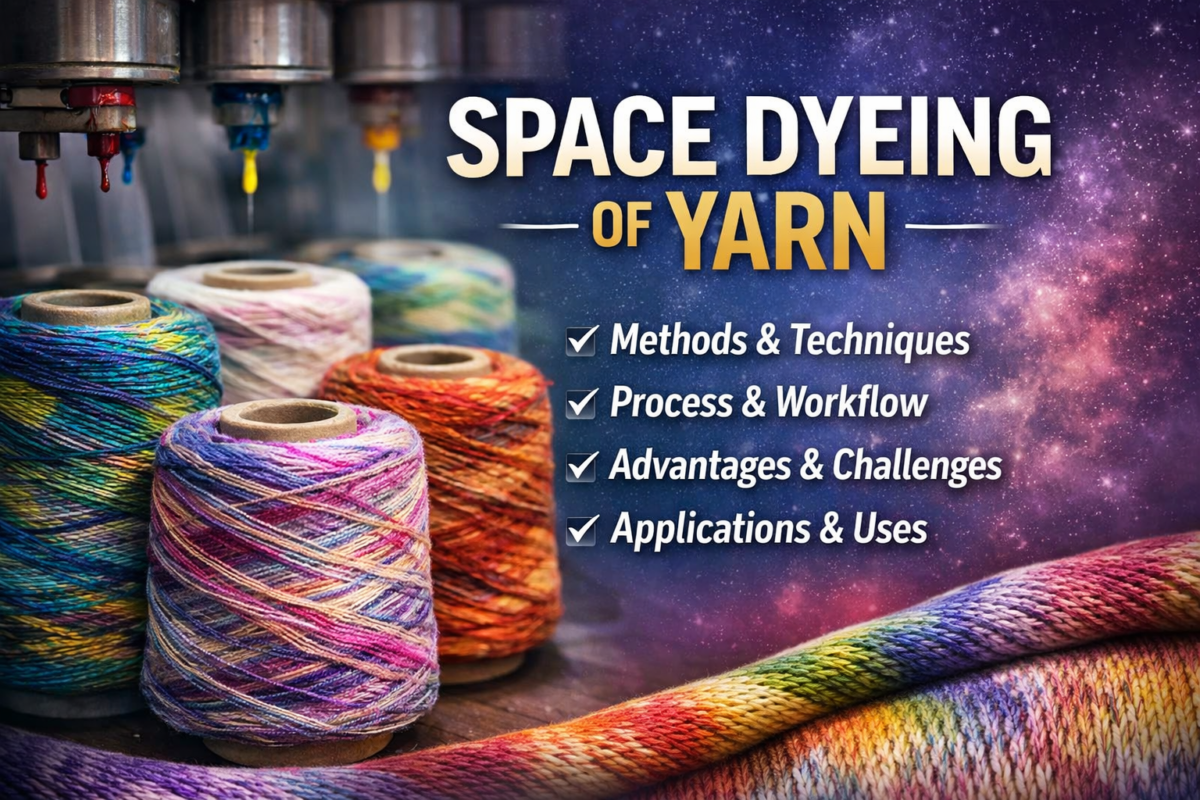
Space dyeing is one of the most creative and visually striking dyeing techniques used in modern textiles. Known for its vibrant, irregular color effects, space dyeing transforms ordinary yarns into high-value materials used in fashion, carpets, upholstery, and technical textiles. Unlike conventional solid dyeing, space dyeing applies multiple colors along the length of a single yarn, creating dynamic and unpredictable patterns in the final fabric.
This article explains what space dyeing is, how it works, different methods, advantages and limitations, and why it continues to be important in today’s textile industry. The discussion builds upon established industry knowledge and technical references
What Is Space Dyeing?
Space dyeing (also known as yarn printing) is a yarn dyeing technique in which two or more colors are applied intermittently along the yarn length, either in repeating or random sequences. When such yarns are woven or knitted, they produce rich, multicolored, non-uniform designs without the need for fabric-level printing.
Unlike solid-dyed yarns, space-dyed yarns generate:
Flecked
Striped
Marled
Melange-like effects
These effects depend on yarn thickness, stitch density, fabric construction, and color spacing.
Why Space Dyeing Is Used in Textiles
The primary objective of space dyeing is aesthetic enhancement with minimal processing. Designers and manufacturers prefer space dyeing because it allows multiple design effects from a single yarn source.
Key purposes include:
Creating fancy and premium visual effects
Eliminating the need for fabric printing
Adding depth and texture to knitted and woven fabrics
Producing high-value yarns for fashion and interiors
Basic Process Flow of Space Dyeing
Although the machinery and methods vary, the fundamental process follows these steps:
Localized dye application to yarn
Fixation (usually steaming or heating)
Washing-off unfixed dyes
Drying and finishing
The controlled placement of colors is what differentiates space dyeing from conventional dyeing processes.
Major Methods of Space Dyeing
Several industrial and semi-industrial methods are used depending on yarn form, fiber type, and end use
1. Space Dyeing in Hank or Skein Form
In this method, yarn hanks are laid out and different colors are applied at specific intervals using brushes, sprays, or rollers.
Features:
High design flexibility
Suitable for short production runs
Common in knitting yarns and hand-crafted textiles
Limitations:
Labor-intensive
Time-consuming
Not ideal for mass production
2. Space Dyeing in Package Form
Yarn wound on cones or packages is dyed either manually or by machine.
Manual method:
Dye injected using syringes or dip-stick techniques
Highly artistic but skill-dependent
Machine method:
Multiple color tanks inject dyes under pressure
Better repeatability and sharper patterns
Widely used for industrial production
3. Continuous or Warp Yarn Printing
Here, warp yarn sheets pass through color applicators such as rollers or spray nozzles in a continuous process.
Characteristics:
Produces long color repeats
High productivity
Common in carpet and upholstery yarns
This method is ideal where controlled and repeatable space effects are required.
4. Knit–De-Knit Process
In this innovative technique:
Yarn is knitted into a fabric
The fabric is printed or dyed
The fabric is unraveled back into yarn
Advantages:
Produces micro-spaced color effects
Unique visual texture
Challenges:
Partial dye penetration
Curling of yarn after de-knitting
5. Space Dyeing of Cheese Packages
Cheese dyeing machines apply programmable injections of different dyes into yarn cones.
Benefits:
High precision
Excellent shade sharpness
Suitable for synthetic filament yarns
This method is widely adopted in modern automated dye houses.
Applications of Space Dyed Yarns
Space dyeing is extensively used across multiple textile sectors:
Fashion apparel (sweaters, dresses, activewear)
Carpets and rugs
Upholstery fabrics
Home furnishings
Fancy knitting yarns
Automotive and interior textiles
The same yarn can create different visual effects depending on fabric construction, making it highly versatile.
Advantages of Space Dyeing
Space dyeing offers both aesthetic and operational benefits (Textile Learner):
Unique multicolor effects without fabric printing
Lower overall dye and chemical consumption
Reduced effluent generation
Shorter processing routes
High value addition to yarns
Cost savings in design creation
Limitations and Challenges
Despite its advantages, space dyeing has certain drawbacks:
Process complexity
Risk of color overlapping or streaking
Difficulty in exact shade matching
Limited control over final fabric appearance
Not suitable for all fabric designs
Careful process control and experience are essential for consistent quality.
Space Dyeing and Sustainability
With growing emphasis on sustainable textiles, space dyeing is gaining renewed attention. Since it can replace fabric printing and reduce chemical usage, it aligns well with eco-friendly manufacturing goals when properly managed.
Conclusion
Space dyeing remains a powerful and creative tool in textile coloration, blending art with engineering. Its ability to deliver striking visual effects directly at the yarn stage makes it invaluable for fashion, interiors, and technical textiles. While the process demands precision and expertise, the design freedom and value addition it offers continue to drive its popularity in the global textile industry.
As innovation in machinery, automation, and eco-chemistry advances, space dyeing is set to remain a key differentiator in premium textile production.
Frequently Asked Questions (FAQs) on Space Dyeing
What is space dyeing in textiles?
Space dyeing is a yarn dyeing technique where multiple colors are applied intermittently along the length of a single yarn. When the yarn is knitted or woven, it produces unique multicolored and irregular patterns without fabric-level printing.
What fibers are suitable for space dyeing?
Space dyeing can be applied to cotton, wool, acrylic, polyester, nylon, viscose, and blended yarns. The choice of dyes and fixation method depends on fiber type and end-use requirements.
How is space dyeing different from yarn printing?
Although often used interchangeably, space dyeing focuses on color spacing along yarn length, while yarn printing may involve more controlled or patterned color application. Space dyeing usually results in more random and artistic effects.
What are the main applications of space-dyed yarns?
Space-dyed yarns are widely used in knitwear, carpets, rugs, upholstery fabrics, home furnishings, sportswear, and fancy yarns due to their decorative and premium appearance.
Is space dyeing environmentally friendly?
Compared to fabric printing, space dyeing can be more sustainable as it reduces dye, water, and chemical consumption. When combined with low-liquor dyeing systems and eco-friendly dyes, it supports sustainable textile production.
What are the limitations of space dyeing?
Challenges include shade reproducibility, process complexity, partial dye penetration, and limited control over final fabric patterns. Skilled process control is required for consistent results.